TIME!
Keep in mind what is important to you, your family, and your community.
Give the gift of time, give it today, tomorrow, tonight at bedtime, at dinner time, and the all important travel time (time in the car). Put away the electronics, take out the games, read a chapter book you will all enjoy, talk at the dinner table, do chores together, or just talk. Be present to your child and yourself. Your children are a gift to you - enjoy them!
Tuesday, April 1, 2014

Sunday, March 30, 2014
Social Skills, more than you thought.
Social skills: please and thank you?
It really is much more than that. Social skills, are in my mind, the ability to share space with one another, communicate, share, express, create, and yes work together. We have communication skills that allow us to use our words to express ideas and thoughts. We use our eyes to interpret the person we are talking to (facial expressions, body language, tone of voice), and to interpret the context of the situation. In short Social Skills are a great big package of integrated input and feedback from the people and places we are at.
Bottom Line?
Social Skills and social interactions are a part of everyday life! AND they are a very important part of school life, work life, and the communities in which we live. This video very aptly portrays the importance of social skills and a social life.
It really is much more than that. Social skills, are in my mind, the ability to share space with one another, communicate, share, express, create, and yes work together. We have communication skills that allow us to use our words to express ideas and thoughts. We use our eyes to interpret the person we are talking to (facial expressions, body language, tone of voice), and to interpret the context of the situation. In short Social Skills are a great big package of integrated input and feedback from the people and places we are at.
Bottom Line?
Social Skills and social interactions are a part of everyday life! AND they are a very important part of school life, work life, and the communities in which we live. This video very aptly portrays the importance of social skills and a social life.
Friday, February 14, 2014
Are you socially competent?
What is social competency? Well it is the ability to understand, act, and respond to our very complex social world. Now I know you are saying "complex social world?" We just have to speak to each other, what's the big deal? Social communication is complex. It comprises body language, words, and tone of voice (the basics). In addition it includes context and culture. Stir in some emotions and viola you have a complex social interaction. Social interactions are dynamic and ever changing, the more practice a child gets when younger the better. Everything you do and say become part of your child's social abilities or competencies.
When your child is in school there are social interactions happening all the time, from the bus driver, lunch ladies, office staff, the student body, and their teacher(s) they are in constant communication! They learn to be respectful, to say please and thank you, look at people when they speak, and to take turns speaking. They are learning the very basics of social interaction. To give you an example how complex it is think of what goes into a conversation:
This is just the minor mechanics of conversation it doesn't mention the social component of picking up on the emotional and social cues of what the other person is thinking or feeling. Are our kids are picking up on those cues and practicing conversations?
So how do we teach our kids social competency in this fast moving, electronics driven world? We talk to them, create conversations about what they are learning, instill curiosity about people and the world around us, and help our kids have a strong emotions vocabulary.
When your child is in school there are social interactions happening all the time, from the bus driver, lunch ladies, office staff, the student body, and their teacher(s) they are in constant communication! They learn to be respectful, to say please and thank you, look at people when they speak, and to take turns speaking. They are learning the very basics of social interaction. To give you an example how complex it is think of what goes into a conversation:
1.
Joint Attention usually eye contact and whole body listening (shoulders, hands, feet, facing the other person(s).
2.
Greeting (age appropriate)
3.
Small talk (no special interest – short couple of statements)
4.
Initiate the topic (plus pause so others can respond)
5.
Respond (turn taking) (4-5 times before topic change)
6.Topic Management
7.
End conversation
So how do we teach our kids social competency in this fast moving, electronics driven world? We talk to them, create conversations about what they are learning, instill curiosity about people and the world around us, and help our kids have a strong emotions vocabulary.
Thursday, January 2, 2014
Happy New Year!
I am not big into creating New Year's resolutions, however I do like to set little goals. My little goals might be to be more mindful, or more open to different things (food, points of view, TV shows...). Many of you know I am an advocate, and student, of Emotional Intelligence. So I read and try to find ways to keep myself empowered so that I can empower others to connect with family, friends, and co-workers. I ran across this post form SixSeconds:
Tips for Holiday Peace
Read on - I found this Josh Freedman post to cut right to the chase of those repeated 'family' dialogs. There are a ton of feelings underneath the family gatherings. For me it comes down to acceptance. Is my family judging me? or accepting me? Can I be just me? Or is there Judgement? Maybe it is more of my brain and my thinking that has me questioning. Maybe it's okay to accept myself and stop worrying what others think.
Tips for Holiday Peace
Read on - I found this Josh Freedman post to cut right to the chase of those repeated 'family' dialogs. There are a ton of feelings underneath the family gatherings. For me it comes down to acceptance. Is my family judging me? or accepting me? Can I be just me? Or is there Judgement? Maybe it is more of my brain and my thinking that has me questioning. Maybe it's okay to accept myself and stop worrying what others think.
Monday, June 10, 2013
The ‘Dream Team’ - what if?
Every student should have a “dream team”, adults and peers that they can count on for guidance, support, fun, and the proverbial mirror. Most students probably feel, or know, that they have that and they may even know how to use it. But for children with disabilities or learning differences they may not know who, what, or how to use their “dream team”. For a student with Autism Spectrum Disorder (ASD) or any student with an IEP, their dream team is automatically built in as part of their IEP. However most students don’t know that till they are older and many may not know how to use it. Additionally the schools may not view themselves as the “dream team” of support for the student. What if we started students in middle school to think of ‘their’ team as ‘THEIR’ team? What if we clued the team into what we are doing so that we created a cohesive group of adults and maybe peers that understand ASD (& other learning differences), the individual student, the family, and the community? What if that team met regularly to discuss, anticipate, and plan for events in this student’s school career? I think the “What if” needs to become a ‘when’ - and a plan.
In a graduate class my class discussed the idea of insider and outsider status. Insider status is being part of a social network. “The notion that social networks provide important buffers against stress and depression has become a truism of psychology. Simply put, friends and other helpful individuals such as therapists and caring teachers serve as important sources of validation, empathy, and reflection, as problem solvers, coaches and models of new behaviors.” (Baker & Welkowitz p.177) Having a dream team can facilitate change, friendship, and a social network. This will, perhaps, transform a student’s school and life experience. First we need to start with the IEP team, an already established ‘dream team”. The IEP teams I work with are highly dedicated and knowledgeable individuals ranging from special educators, speech pathologist, occupational therapists, school counselors, para-professionals, administrators, teachers and parents. But are we a high performing team that practices, runs through plays, knows our strengths and weaknesses? I think this is an area where we could use some work.
First we need to think of ourselves as a “dream team” and categorize what that means. We need the team to look beyond the academic needs of the student, we need to look at the knowledge base of the staff, we need to look at the class structure both for academic structure and peer mix, we may even need to look at the class and provide more education on the acceptance of differences. When these things are in place we need to meet on a regular basis and continually shape our plan. Regular meetings would allow for flexibility to meet the needs of the student and the teachers who may be experiencing their own difficulties in relating and teaching the student. Meetings not only provide an opportunity to review the progress of the student, they provide an opening to discuss the “roadblocks to promoting new social behaviors and plan for the ‘next step’ in their program.” (Baker & Welkowitz p.176)
As a student in our class stated “there are other people out there and they are not just annoyances”. One of our team ‘roadblocks’ may be in understanding the student – from the student’s perspective. Peers may “just be annoyances” to them. How do we change that? By introducing them to the inside and building up their knowledge base of peers. Connecting kids with groups gives social network and social community. Exposure to this ‘inside’ will be slow going but should be initiated and not ignored. Working with a students interests (gaming, math, animal facts) can be the foundation to building and creating an ‘insider’ perspective. Members of the dream team will be the coaching, cheering, and interpreting for the ASD/learning difference student at the same time they may need to be ‘promoting’ their player. For example telling the other students “Sammy Student knows a lot about animals, why don’t you ask him?” these interventions will help facilitate interactions that will build on the insider knowledge and eventually help the ASD/learning difference student gain ‘insider status”.
Dream teams are essential for the ASD student. Building on what is already in place, the IEP team, and creating a more open dialog around the student’s strengths and weaknesses and the team’s strengths and weaknesses will create a stronger more knowledgeable team. With that strength the team can then focus on the game plan for introducing a student to the ‘inside’ world of social networking, promote the student and explore the ‘game’ of the social world. I look forward to developing my ‘dream teams’ and ‘promoting’ the students I work with.
In a graduate class my class discussed the idea of insider and outsider status. Insider status is being part of a social network. “The notion that social networks provide important buffers against stress and depression has become a truism of psychology. Simply put, friends and other helpful individuals such as therapists and caring teachers serve as important sources of validation, empathy, and reflection, as problem solvers, coaches and models of new behaviors.” (Baker & Welkowitz p.177) Having a dream team can facilitate change, friendship, and a social network. This will, perhaps, transform a student’s school and life experience. First we need to start with the IEP team, an already established ‘dream team”. The IEP teams I work with are highly dedicated and knowledgeable individuals ranging from special educators, speech pathologist, occupational therapists, school counselors, para-professionals, administrators, teachers and parents. But are we a high performing team that practices, runs through plays, knows our strengths and weaknesses? I think this is an area where we could use some work.
First we need to think of ourselves as a “dream team” and categorize what that means. We need the team to look beyond the academic needs of the student, we need to look at the knowledge base of the staff, we need to look at the class structure both for academic structure and peer mix, we may even need to look at the class and provide more education on the acceptance of differences. When these things are in place we need to meet on a regular basis and continually shape our plan. Regular meetings would allow for flexibility to meet the needs of the student and the teachers who may be experiencing their own difficulties in relating and teaching the student. Meetings not only provide an opportunity to review the progress of the student, they provide an opening to discuss the “roadblocks to promoting new social behaviors and plan for the ‘next step’ in their program.” (Baker & Welkowitz p.176)
As a student in our class stated “there are other people out there and they are not just annoyances”. One of our team ‘roadblocks’ may be in understanding the student – from the student’s perspective. Peers may “just be annoyances” to them. How do we change that? By introducing them to the inside and building up their knowledge base of peers. Connecting kids with groups gives social network and social community. Exposure to this ‘inside’ will be slow going but should be initiated and not ignored. Working with a students interests (gaming, math, animal facts) can be the foundation to building and creating an ‘insider’ perspective. Members of the dream team will be the coaching, cheering, and interpreting for the ASD/learning difference student at the same time they may need to be ‘promoting’ their player. For example telling the other students “Sammy Student knows a lot about animals, why don’t you ask him?” these interventions will help facilitate interactions that will build on the insider knowledge and eventually help the ASD/learning difference student gain ‘insider status”.
Dream teams are essential for the ASD student. Building on what is already in place, the IEP team, and creating a more open dialog around the student’s strengths and weaknesses and the team’s strengths and weaknesses will create a stronger more knowledgeable team. With that strength the team can then focus on the game plan for introducing a student to the ‘inside’ world of social networking, promote the student and explore the ‘game’ of the social world. I look forward to developing my ‘dream teams’ and ‘promoting’ the students I work with.
Friday, March 8, 2013
Got Feelings?
Of course you do! But are you able to identify, manage, and recognize your feelings as well as the feelings of others? And if you say yes, which I hope you do, are you teaching and modeling these skills for your children? It's very important that they learn to acknowledge and accept all of their feelings and understand the situations or events that triggered those feelings.
Why is it important to know your feelings? Because accurately identifying your feelings allows you to better work through them. Self-awareness is a life skill that allows us to accurately asses our feelings, interests, strengths, and values; it leads to self-confidence. That’s a very powerful attribute for children and adults.
I frequently work with kids who aren’t able to distinguish between frustration, anxiety, jealousy, or irritation, to name a few. Big feelings are often channeled directly into anger. Anger is reactive, and can let off steam, but not productive in solving or resolving the situations that caused the feeling. Channeling an emotion into a reaction like anger does not provide understanding, control, or growth also known as self-management. We all want control, to be in charge of ourselves and to learn from our experiences.
Knowledge (self- awareness) = self-confidence
Control (self-management) =overcoming obstacles, perseverance, and "grit"
Control (self-management) =overcoming obstacles, perseverance, and "grit"
When a child can identify they are jealous, sad, disappointed, nervous, insecure, and other difficult emotions, they have the power to communicate those strong feelings and discuss with either their parents or teacher. The adults then have an opportunity to help the child work through the situation, problem solve, and ultimately gain the skills to work through the situation. This builds understanding, compassion, and perspective taking. We want our children to build a good sense of self and strong understanding of others and how we fit in within the community of family, friends, and classmates.
Empower your child to identify and understand their feelings. It is a vibrant, exciting, and colorful world!

Thursday, November 22, 2012
Good night, sweet dreams!
The bed time reading ritual is a treasure! Sitting on your child's bed snuggeled up, with just the night stand light on creates a wonderful atmosphere of comfort, warmth, and connection. Reading to your child at night gives you time to relax, be present, unwind, and relate to your child. Share your favorite stories from your childhood and discover new ones together. As a parent the fun comes from using different voices for the characters, working on your inflection, and just immersing yourself in the moment. You are modeling for your child the joy of reading and all the fun and pleasure it brings. I loved to read Dr. Suess's Sleep Book adding in the yawns, changing my speed, and even talking as if I were falling asleep. Of course anything Dr. Suess is entertaining. From early political, think Sneetches and treating others different, to the Lorax and it's environmental message. So many of Dr. Suess's books are wonderful early readers like Fox in Sox, The Foot book, and Green Eggs and Ham. Take turns (you read one page your child reads one page) it is a fun way to help your child learn to read.
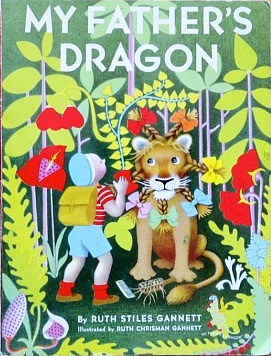
We read My Father's Dragon, and had an excellent adventure through three books! As my son got older I read to him from Rudyard Kipling's, The Just So Stories he loved the story of The Elephant Child, and I loved to read the words "oh Best Beloved" and "great, gray, green, greasy Lippopo River all set about with fever trees." It just sort of rolls of your tongue, try it!
Keep reading through those upper grades too! We read the Hobbit, (J.R.R Tolkien) Night, by Elie Wiesel, and other stories that were required in middle school. This was significant because reading out loud helps one remember details - perfect for schoolwork. The added benefit is, as a parent, you know what your child is studing and have a very natural way to relate and connect to them about school.
Go to your local library, talk to the librarians, get their suggestions based on the interest of your child. You will be modeling for your child working with a libraian (self-advocacy), create a community friend, and find out about programs taking place within your library, a win-win experience! Reading with your child is an adventure - share and inspire the joy!
We read My Father's Dragon, and had an excellent adventure through three books! As my son got older I read to him from Rudyard Kipling's, The Just So Stories he loved the story of The Elephant Child, and I loved to read the words "oh Best Beloved" and "great, gray, green, greasy Lippopo River all set about with fever trees." It just sort of rolls of your tongue, try it!
Keep reading through those upper grades too! We read the Hobbit, (J.R.R Tolkien) Night, by Elie Wiesel, and other stories that were required in middle school. This was significant because reading out loud helps one remember details - perfect for schoolwork. The added benefit is, as a parent, you know what your child is studing and have a very natural way to relate and connect to them about school.
Go to your local library, talk to the librarians, get their suggestions based on the interest of your child. You will be modeling for your child working with a libraian (self-advocacy), create a community friend, and find out about programs taking place within your library, a win-win experience! Reading with your child is an adventure - share and inspire the joy!
 |
| The original. |
 |
| A wonderful adventure! |
 |
| A wonderful set of stories, fun to read! |
 |
| Perfect bed time story. |
 |
| This book will capture your interest with fabulous word play. |
Subscribe to:
Posts (Atom)